




Namibia’s agricultural sector is facing mounting pressure, with the potential loss of thousands of farm jobs raising concerns about the country's wider employment outlook.
In an economic outlook presented to the Namibia Agricultural Union (NAU), a stark picture emerged of a country with just over three million people, approximately 1.9 million of working age, but only 546,805 in employment. The presentation also highlighted that only about 15,000 people are employers, leaving a relatively small business community responsible for sustaining a large population.
Agriculture, forestry and fishing employ approximately 88,277 people, making the sector one of the country's important sources of employment. Commercial agriculture alone supports an estimated 55,000 direct jobs and approximately 200,000 dependants.
The concern is that these jobs are increasingly vulnerable.
Employment in agriculture, forestry and fishing declined from 167,242 in 2018 to 88,277 in 2023. The situation is particularly worrying in rural regions where farming remains among the few sources of formal employment and income for households.

The pressure is now being compounded by several challenges facing farmers simultaneously. Foot-and-mouth disease (FMD), which led to the suspension of Namibia's FMD-free status in September, has disrupted livestock movement and exports, while tightening international market restrictions. The estimated economic impact of an export-ban scenario stands at N$3.4 billion in lost GDP.
The threat of drought adds another layer of uncertainty. Regional forecasts point to the possibility of below-normal rainfall between January and March 2027, with a combination of drought and FMD potentially increasing the estimated GDP loss to N$4.4 billion.
Farmers are also contending with rising input costs, expensive fuel, fertiliser and animal feed, alongside the prospect of higher interest rates. These pressures are tightening cash flow at a time when government has limited capacity to introduce significant financial relief.
The four agricultural unions – NAU, NNFU, NECFU and PDNFU – have reportedly been engaging the labour ministry for several months, proposing measures aimed at preventing further job losses in rural communities. However, their proposals have yet to receive positive support.
The broader employment situation makes the challenge even more urgent. Namibia's broad unemployment rate stands at 54.8%, rising to 61.4% among young people aged 15 to 34. For farm workers who lose their jobs, alternative employment opportunities are limited.
The argument being advanced by the agricultural unions is that protecting agricultural employers is equally important as protecting agricultural jobs. Farmers who remain financially viable can continue employing workers, supporting households and sustaining economic activity in rural towns.
With the coming 18 months expected to be particularly challenging, the focus is increasingly shifting towards maintaining farm businesses and preventing further employment losses.
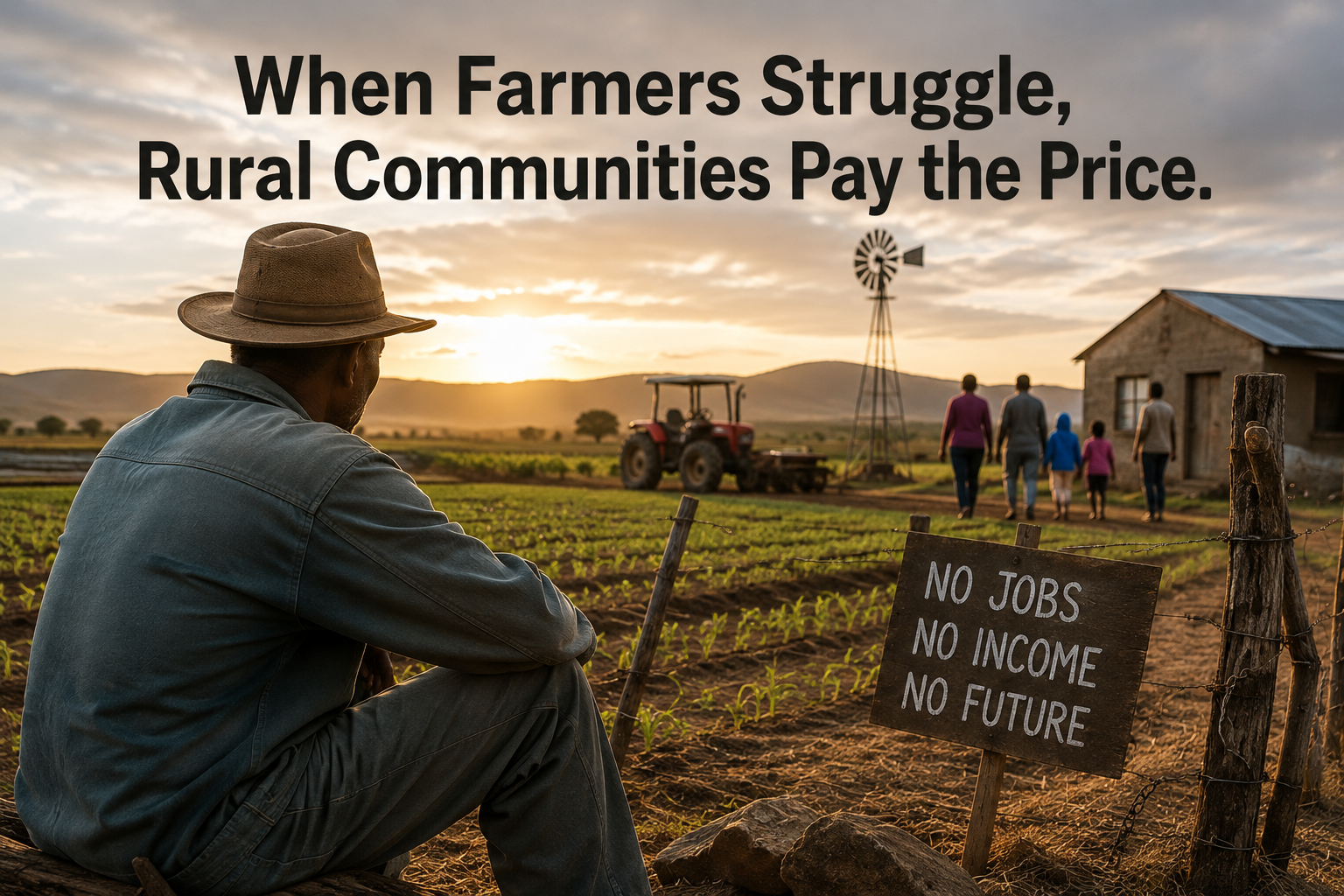
The message is clear: when a farm closes or reduces its workforce, the consequences extend far beyond the farm gate. Children may leave school, household incomes disappear and rural businesses lose customers.
Namibia cannot afford to lose the agricultural employers it already has. Every farm job lost is not simply a vacancy waiting to be filled; it is a livelihood that may have nowhere else to go.
Source: Namibia Agriculture Union

Woodgate House
Suit 208-209
Cairo Road Lusaka Zambia,
Email: agricoopnews@yahoo.com
Cell: 0955 791 676